

Plenary Speaker

Prof. Jinhua Liu, Sichuan Academy of Social Sciences, China
She is a doctoral supervisor and Director of the Institute for Social Governance at Southwest Petroleum University. She has been selected as a member of the 14th Batch of Sichuan Provincial Academic and Technical Leaders and as a Tianfu Qingcheng Distinguished Scholar in Social Sciences of Sichuan Province. She also serves as President of the Sichuan Association for Marriage, Family and Women’s Studies and Vice President of the Sichuan Marxism Society, among other academic positions. Her research mainly focuses on social governance and population sociology. She has led 10 national and provincial-level research projects, including key projects funded by the National Social Science Fund of China and major projects supported by the Sichuan Provincial Social Science Fund. Her policy advisory reports have received one directive from central government leaders and seven affirmative endorsements from provincial and ministerial leaders. She has received seven provincial or ministerial-level awards or above, including the Social Science Research Achievement Award of the National Ethnic Affairs Commission and the Outstanding Achievement Award in Philosophy and Social Sciences of Sichuan Province.
Keynote Speaker

Prof. José Javier López, Minnesota State University in Mankato, USA
José Javier López is Professor of Geography at Minnesota State University in Mankato. He was born in San Juan, Puerto Rico, and received a doctorate degree in geography from Indiana State University. Following graduation, he moved to Minnesota and began a career in geographic education. Since becoming a faculty member of MSU’s College of Social and Behavioral Sciences in the late 1990s, Lopez has researched different issues pertinent to the social geography of the United States and Latin America. Over the years he has taught many systematic courses, including Spatial Statistics, Spatial Analysis, Cultural Geography, Economic Geography, Social Geography, and Rural Development.
Invited Speaker
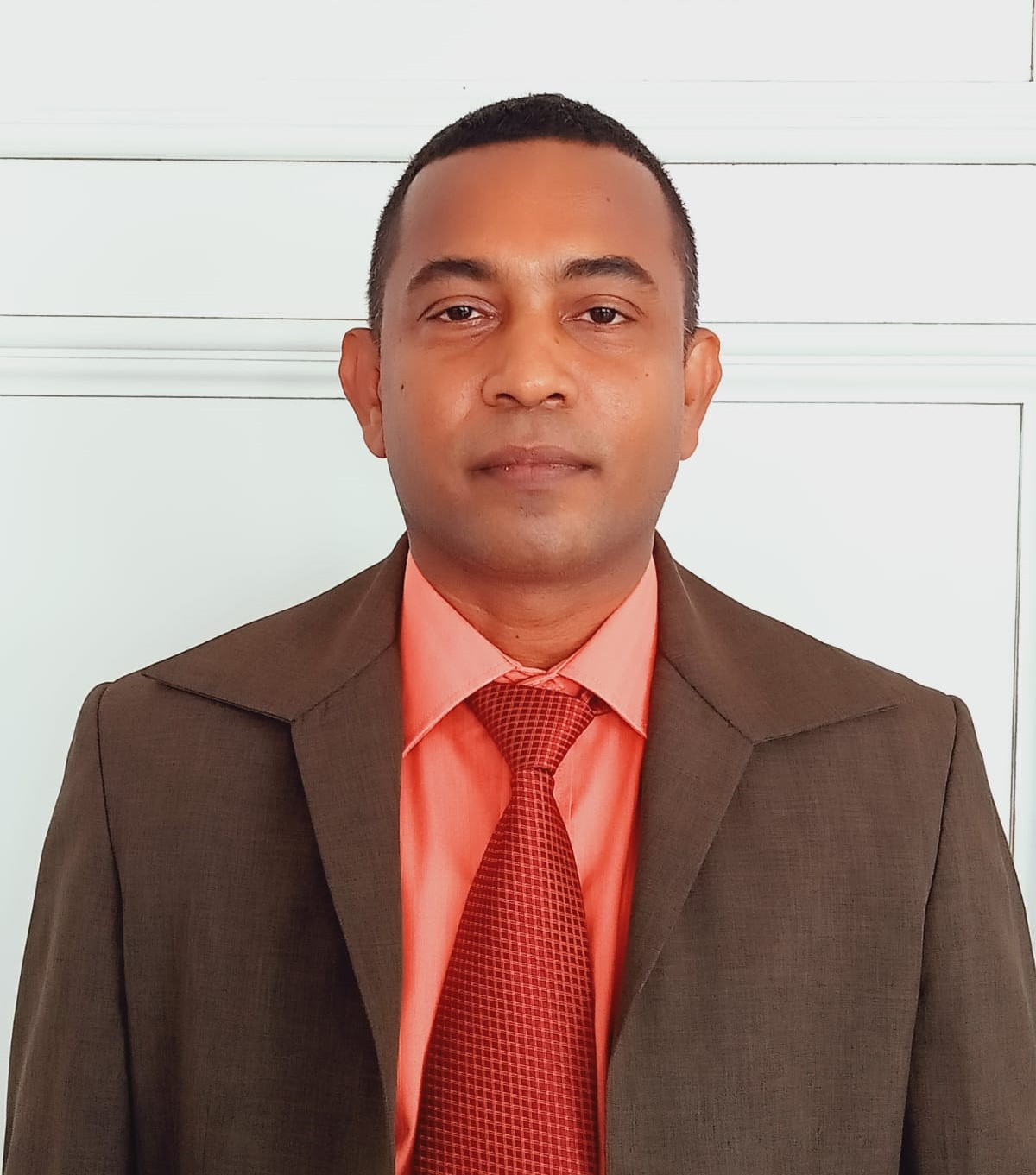
Prof. Anton Piyarathne, The Open University of Sri Lanka, Sri Lanka
Anton Piyarathne currently serves as a professor and the head of the
department of Social Studies (SSD) of the Open University of Sri
Lanka (the OUSL). He teaches Anthropology and Sociology for both
undergraduates and postgraduate students in his university. He
earned his PhD from the Department of Anthropology of Macquarie
University, Sydney, Australia in 2014. Anton has recently published
“Constructing Commongrounds: Everyday Lifeworlds Beyond Politicised
Ethnicities in Sri Lanka”, which is his third monograph discusses
ethnicity and ethnic relationships in Sri Lanka. Apart from
ethnicity and ethnic boundary negotiations he has been interested in
many areas including identity and politics of Indian Origin
Plantation Tamil community, ethnoreligious nationalisms, nation
building and citizenship, national integration and disintegration,
conflict and peacemaking, religious pluralism and religious
syncretism, development and resettlement, social stratification
systems and existential realities of everyday social lifeworlds of
the different groups in Sri Lanka.
Speech Title: Moorthi’s Dream: An Ethnography of Dream as the
Nexus between Human and their Guardian Deity
Abstract: It is believed that the guardian deity’s role is to protect human and their properties from the various disasters and facilitate for followers to achieve prosperity. The deities communicate with the communities via dreams of holy people. This paper gives an ethnographic description of the nexus between the guardian deity and the human via dreams. Ethnographic research conducted between 2010 and 2012 in the rural village of Pānama highlights how the villagers were protected by the Goddess Pattini during Tsunami and other disastrous situations connected with the war. Moreover, the entire eastern region is operating under broader cosmological order connected to Goddess Pattini and lord Murugan (T .) or God Kataragama (S. ). When Tsunami hit on 26 December 2004 Sri Lanka, the villagers were living with the war, a heavy battle between the Sri Lankan military forces and the LTTE, a manmade disaster. The main dream discussed in the paper suggests how people in Pānama was able to save their lives due to the prewarning given to them by their guardian deity, Goddess Pattini, a few months earlier to the incident and were prepared. The Goddess Pattini has appeared in dreams of a few holy people in the village and warned about a precarious situation in the future. And the entire villagers gathered in the village shrine room, ampitiya devālaya (S. shrine) and performed rituals, a way of preparing for the disaster. Even though, the Tsunami claimed more than 31,000 lives from the eastern coast, the Pānama people who lived in a village which is lower than the sea level was safe as they were prepared.